
As outdoor living spaces gain increasing importance in modern life, outdoor lighting has evolved from a mere functional necessity to a key element of home aesthetics, security, and sustainability. In 2026, the outdoor lighting market is witnessing distinct trends driven by technological innovation and environmental awareness. This article explores the latest trends, core debates (especially between solar and plug-in options), practical selection guidelines, and addresses common customer questions to help you make informed decisions.

Current Outdoor Lighting Trends in 2026
The 2026 outdoor lighting landscape is defined by three core trends: intelligence, energy efficiency, and integration. First, intelligent lighting has become mainstream, with more products equipped with IoT connectivity, AI adaptive dimming, and remote control via mobile apps. These smart systems can adjust brightness based on pedestrian flow, ambient light intensity, and even weather conditions, while supporting cloud-based fault early warning for easier maintenance . Second, energy efficiency is no longer an option but a requirement. LED technology dominates the market with a light efficiency exceeding 200lm/W, and solar-powered lighting has seen a surge in adoption, with its market penetration rate jumping to 50% in 2025 . Third, integration is a rising trend—outdoor lights are evolving into "smart poles" that combine 5G base stations, environmental monitoring, and even EV charging functions, becoming key nodes in smart city construction . Additionally, minimalist and integrated designs are popular, as they simplify installation and blend seamlessly with various landscapes .
Core Debates in Outdoor Lighting: Solar vs Plug-In
The most fierce debate in outdoor lighting revolves around solar-powered and plug-in (wired) options, with each side having strong advocates. Let’s break down the key arguments:
Cost Debate: Solar light proponents emphasize zero long-term energy costs—after the initial purchase, they rely on sunlight for free . However, critics point out that high-quality solar lights have a higher upfront cost, and battery replacement (every 1-3 years) adds to maintenance expenses . Plug-in light supporters argue that wired LED lights have lower initial installation costs for properties with existing electrical infrastructure, and their long lifespan (up to 50,000 hours) offsets ongoing electricity bills .
Reliability Debate: Plug-in light advocates highlight consistent performance—they provide stable brightness 24/7 regardless of weather or sunlight conditions, making them suitable for high-demand areas like security zones . Solar light critics note that traditional models struggle in low-sunlight regions or prolonged rainy weather. In response, solar supporters cite 2026 technological advancements: premium solar lights can now maintain illumination for 7-15 consecutive rainy days, and some high-end models with solid-state batteries extend this to 22 days .
Installation & Flexibility Debate: Solar lights win points for easy, wire-free installation, which is ideal for remote areas (like mountain trails or orchards) without grid access . Plug-in lights require professional wiring, which is costly and inflexible—relocating fixtures means reworking circuits . However, plug-in advocates argue that wired systems are more secure for permanent installations, as they avoid the risk of theft associated with standalone solar units.
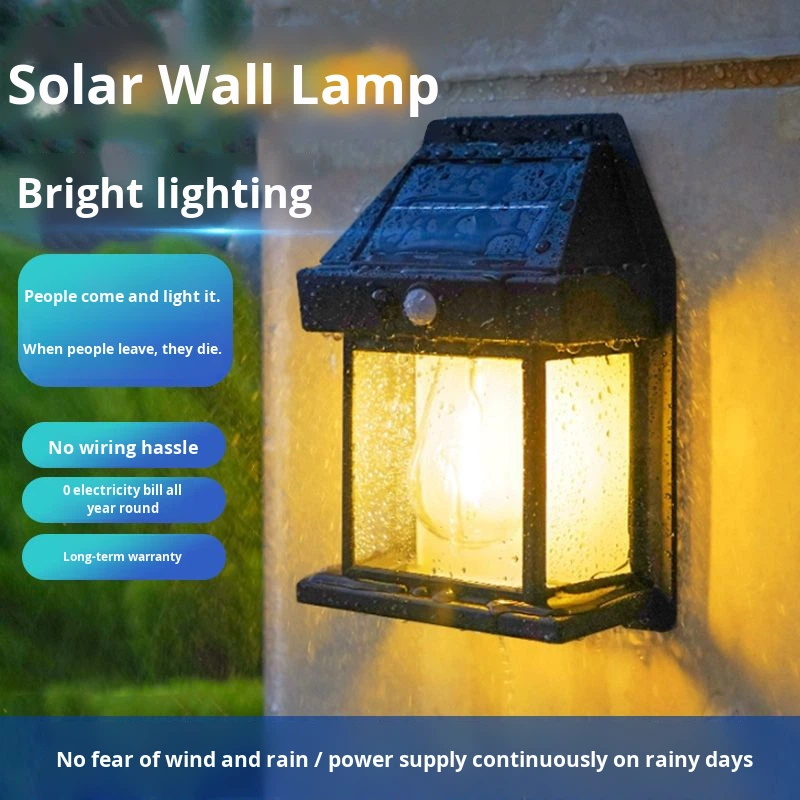
My Preferred Outdoor Lighting: Smart Integrated Solar Lights
Among the diverse outdoor lighting options, my personal favorite is the smart integrated solar light. What makes it stand out is its perfect balance of sustainability, convenience, and functionality. Unlike traditional split-type solar lights, integrated models combine photovoltaic panels, batteries, controllers, and lamps into one unit, reducing installation complexity—two people can complete the setup without professional electricians . The latest models feature high-efficiency monocrystalline silicon panels with a conversion rate of over 23%, ensuring sufficient energy storage even on cloudy days . With smart controls, I can adjust the color temperature (from 2700K warm white to 6500K cool white) via my phone, switching between a cozy ambiance for patio gatherings and bright illumination for security purposes . Moreover, their IP68 waterproof rating and -40℃ to 60℃ operating range make them adaptable to various harsh weather conditions, ensuring long-term reliability . For most residential scenarios like backyards and walkways, they offer an ideal blend of eco-friendliness and practicality.
How to Choose the Right Outdoor Lighting: A Practical Guide
Choosing the right outdoor lighting requires balancing purpose, environment, budget, and functionality. Follow these steps:
1. Clarify the Purpose: Determine if the primary need is security (floodlights with motion sensors), ambiance (string lights or wall washers), or navigation (path lights) . For security, prioritize high-lumen (2000+ lumens) plug-in LED floodlights for consistent brightness . For ambiance, solar string lights or warm-toned path lights are better options .
2. Evaluate the Installation Environment: Check if the area has access to electricity and sunlight. For locations more than 200 meters from the power grid, solar lights save 40%+ on wiring costs . In high-latitude regions with less than 1500 hours of annual sunshine, opt for plug-in lights or high-efficiency solar models with large batteries . Coastal areas need fixtures with anti-salt spray treatment and IP66+ ratings .
3. Set a Budget: The average cost of installing landscape lighting is $4,000, but this varies widely . If budget is tight, start with solar path lights for small areas. For long-term value, invest in plug-in LED lights for high-traffic areas and solar lights for decorative zones (a hybrid approach) .
4. Pay Attention to Key Specifications: Choose IP65+ waterproof ratings for most outdoor environments; use IP68 for underwater applications (e.g., pool lighting) . Select color temperatures based on use: 2700-3000K (warm white) for social areas, 3500-4000K (neutral white) for paths/entries, and 5000K+ (cool white) for security .
Common Customer Questions & Answers
Q1: Can solar lights work reliably in cloudy regions? A1: Yes. 2026’s high-efficiency solar panels have 40% better low-light response . Choose models with ≥23% conversion efficiency and large-capacity lithium iron phosphate batteries, which can maintain illumination for a week of cloudy weather .
Q2: Are smart outdoor lights difficult to maintain? A2: No. Most smart systems offer remote monitoring and AI fault early warning (alerting you 72 hours in advance) . Routine maintenance only requires cleaning solar panels annually and replacing batteries every 3-5 years .
Q3: What’s the right spacing for path lights? A3: Typically 2-3 meters apart, depending on pole height and beam angle. The goal is even illumination without dark gaps or bright hotspots .
Q4: Is motion sensor lighting enough to save energy? A4: Motion sensors are effective but work best with timers and dimming functions. Combining these features reduces energy consumption by 30%+ compared to constant lighting .
Conclusion
2026’s outdoor lighting trends lean toward intelligence, energy efficiency, and integration, with solar and plug-in options each dominating specific scenarios. There’s no one-size-fits-all solution—solar lights excel in remote, low-demand areas, while plug-in lights are superior for high-brightness, continuous-use needs. By clarifying your purpose, evaluating your environment, and understanding key specifications, you can select lighting that balances functionality, aesthetics, and cost. Whether you choose smart solar lights for eco-friendliness or plug-in LEDs for reliability, the right outdoor lighting will transform your outdoor space into a safe, inviting haven.
Post time: Jan-15-2026