
For decades, traditional garden lighting technologies have been used in homes, hotels, parks, restaurants and landscape projects. Today, LED Garden Lights have become a popular alternative because they offer a different combination of efficiency, durability, design flexibility and lighting performance.
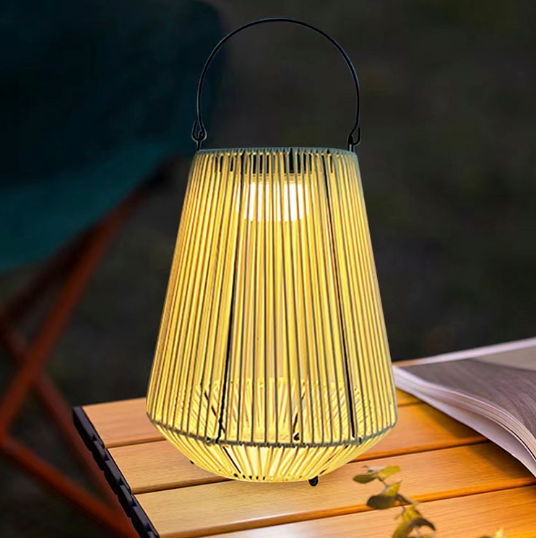
How Are LED Garden Lights Different?
LED stands for light-emitting diode.
Instead of producing light through a heated filament, an LED creates light through a semiconductor.
That technical difference sounds rather dry, but it has a practical effect.
LED lighting can produce useful illumination with relatively low energy consumption.
This is one reason LED technology has become common in outdoor landscape lighting, commercial properties and decorative applications.
And there is another advantage.
LEDs are available in many shapes, sizes and configurations, allowing manufacturers to create compact fixtures for different outdoor applications.
That gives designers more freedom.
A small pathway light does not need to look like a large floodlight. A decorative garden fixture can have a completely different appearance from a functional landscape light.
Energy Consumption: A Major Difference
Let’s start with one of the biggest reasons people move from traditional lighting to LED.
Energy efficiency.
Traditional incandescent lighting converts much of the electrical energy into heat. LEDs are designed to produce light more efficiently.
For a small garden with only a few lights, the difference may not seem dramatic.
But imagine a hotel, resort, restaurant or large landscape project with dozens or even hundreds of fixtures operating every evening.
Now the numbers become more meaningful.
Using energy efficient garden lights can help reduce the electricity required for outdoor illumination.
That does not mean every LED product has the same performance. Wattage, brightness, optical design and operating conditions still matter.
So, don’t compare products by wattage alone.
Look at what you actually get from that wattage.
LED Lighting Can Produce Less Heat
Traditional incandescent bulbs are well known for producing significant heat.
The filament becomes extremely hot to generate light.
LEDs generally produce much less heat at the light source.
Why does that matter in a garden?
For many applications, it simply means the fixture can operate with less heat generation than a traditional incandescent lamp.
This can be useful around decorative materials, plants and outdoor structures.
However, LED fixtures still produce heat, particularly at the electronic components. Good product design and heat management remain important.
So, “LED means no heat” would be an inaccurate statement.
The better way to say it is that LED technology generally produces light more efficiently and can reduce unnecessary heat compared with traditional incandescent lighting.
Small distinction. Important distinction.
Lifespan and Maintenance
Here’s another area where LED lighting can have an advantage.
LED light sources are generally designed for long operating life.
Traditional bulbs, particularly incandescent lamps, rely on a physical filament. That filament eventually fails.
If you’ve ever replaced a bulb only to find yourself replacing another one a few months later, you know the frustration.
For residential gardens, this might be a minor annoyance.
For commercial properties, it can become a maintenance issue.
Imagine staff having to walk through a hotel garden every few weeks to identify failed bulbs.
Or a landscape contractor returning to a site simply to replace lamps.
Longer-lasting LED lighting can reduce the frequency of these routine replacements.
Of course, actual service life depends on product quality, operating conditions, electrical components and environmental exposure.
A poorly designed LED fixture is still a poorly designed product.
Lighting Quality and Color Options
Traditional garden lights often provide a familiar warm glow.
That can look beautiful.
But LED technology gives designers more control over lighting appearance.
Depending on the product, LED garden lighting can be available in different color temperatures, such as warm white, neutral white and cool white. Some products may also offer changing colors or programmable lighting effects.
For example:
Warm white can create a cozy atmosphere around patios and outdoor dining areas.
Neutral white can provide a cleaner appearance for pathways and landscape features.
Cool white may suit some modern architectural environments.
The best choice depends on the project.
A luxury hotel garden may require a very different lighting atmosphere from a public walkway.
This flexibility is one reason LED garden lighting has become popular with landscape designers.
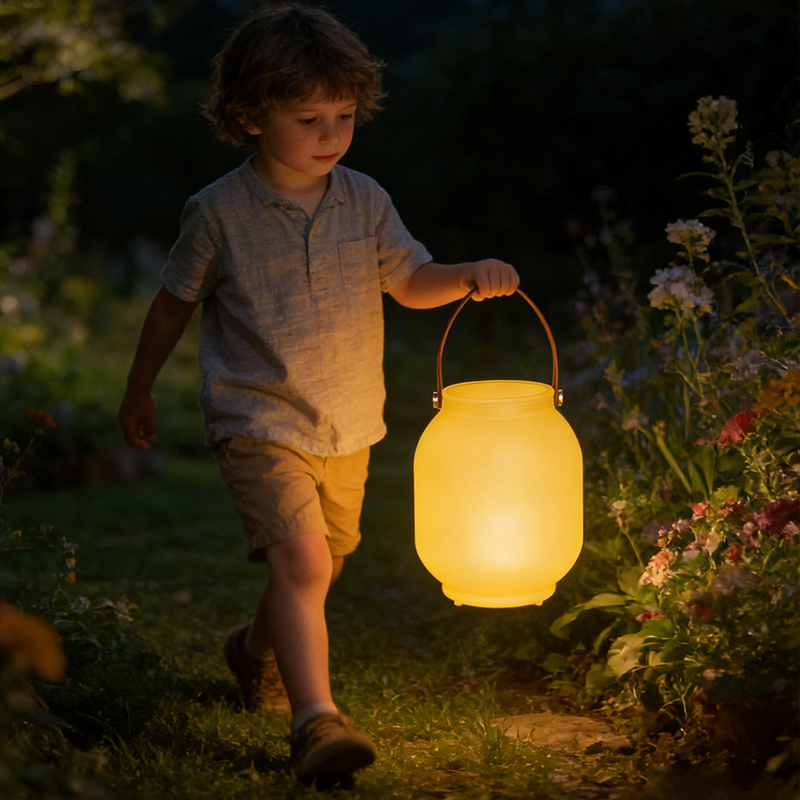
Design Flexibility: LED Has More Room to Play
Think about a traditional bulb.
The light source itself has certain physical limitations.
LED technology allows manufacturers to build much smaller light sources into fixtures with different shapes and designs.
That opens the door to more creative outdoor lighting.
LED garden lights can be designed as:
Pathway lights
Spotlights
Accent lights
Decorative fixtures
Ground lights
Landscape lights
Garden feature lights
Architectural outdoor lighting
This is particularly useful when the lighting needs to become part of the landscape design.
The light fixture does not always have to disappear.
Sometimes, the fixture itself can become a decorative element.
Outdoor Durability Matters More Than People Think
A garden light lives a harder life than an indoor lamp.
It may face rain, dust, humidity, sunlight, temperature changes and accidental impact.
That means outdoor lighting should be designed for the environment.
Waterproof LED garden lights can be particularly useful in exposed areas, but buyers should always check the actual protection rating and product specifications.
Huajun Factory’s LED garden lights are built with an IP65 waterproof rating and are backed by official waterproof testing certifications — ensuring reliable performance in all weather conditions.
Don’t assume that every product labeled “outdoor” offers the same level of weather protection.
For commercial projects, the installation location matters even more.
A covered terrace has different requirements from an exposed garden pathway.
A coastal landscape may present different environmental challenges from a dry inland location.
The environment should guide the product specification.
Installation Can Be More Flexible
LED garden lighting is available in many different configurations.
Some fixtures are designed for direct electrical connection. Others may use low-voltage systems, integrated power supplies or solar charging systems, depending on the product.
This means buyers have more choices when planning a landscape lighting system.
For a new project, the lighting system can be considered from the beginning of the landscape design.
For an existing garden, the goal may be to add decorative lighting without making major changes to the surrounding landscape.
The installation method should always be considered alongside the product.
A great light with an unsuitable installation method is still the wrong solution.
Recommended Reading
How to customize the size of outdoor garden lights bollards?|Huajun
What are the hottest outdoor courtyard decorative lights in the market | Huajun
How to choose exterior garden lights to decorate the patio|Huajun
How to Enhance the high quality experience of outdoor garden lighting |Huajun
Post time: Aug-04-2026