
“How many hours do solar garden lights really stay on at night?”This sounds like a simple question.
You may see solar garden lights advertised with 6–8 hours, 8–10 hours, or even 10–12 hours of lighting time. But when you install them outdoors, the actual runtime may be different.
Why?
Because a solar garden light does not simply “store sunlight and turn it into light.” Its nighttime performance depends on the solar panel, battery, LED power, weather, charging time, lighting mode, and even where the product is installed.
So, before buying solar garden lights, it is important to understand what those advertised hours really mean.
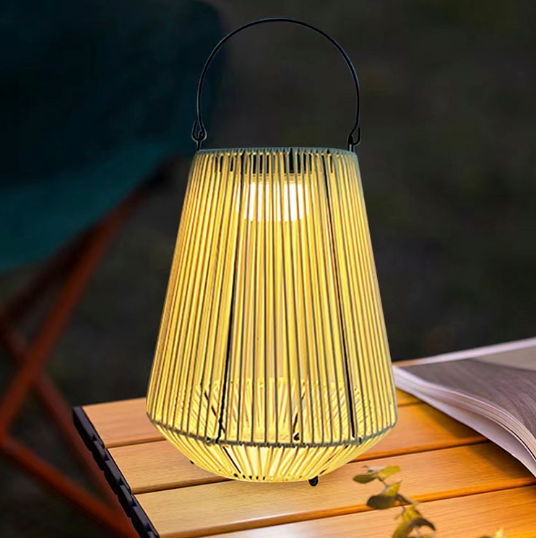
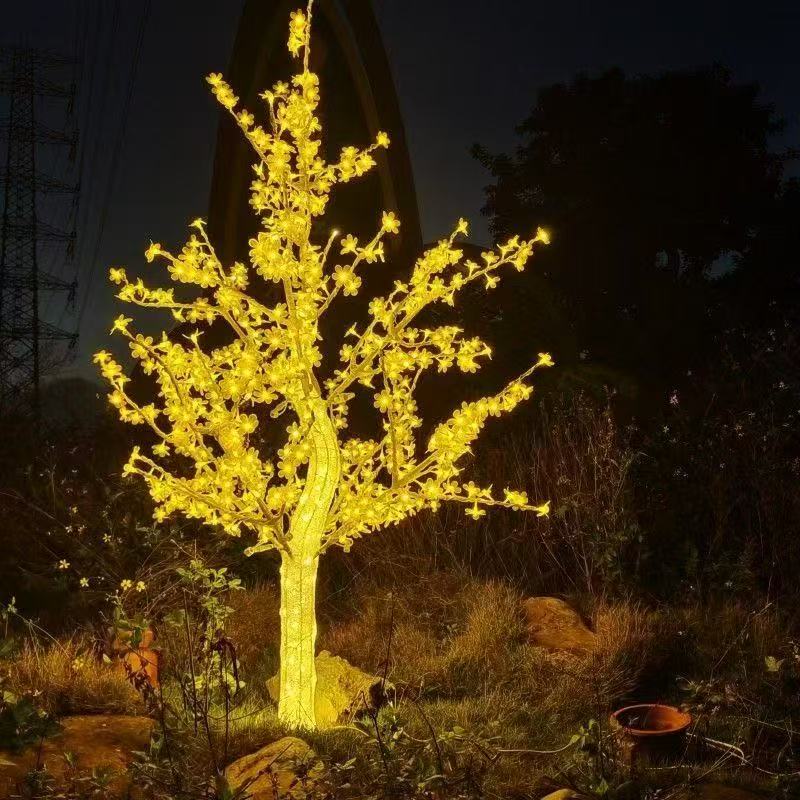
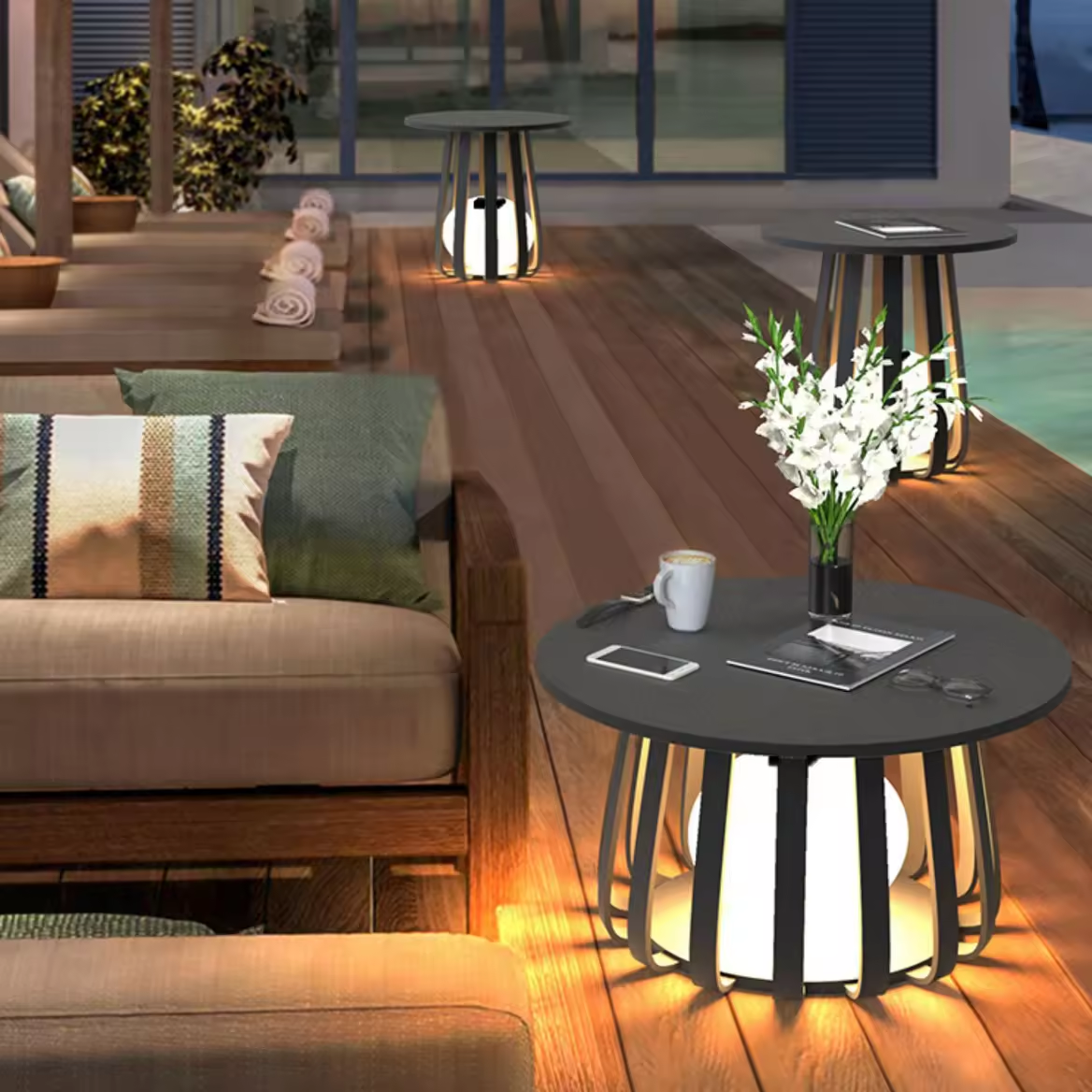
Rattan Solar Garden Lights Waterproof LED Crystal Flower Tree Lights Solar LED Coffee Table
1. How Many Hours Can Solar Garden Lights Stay On?
For many decorative solar garden lights, a typical stated runtime may be around 6–12 hours per night under suitable conditions.
However, this should not be treated as a guaranteed number.
A light advertised for 8–10 hours may achieve that runtime after a good day of sunlight, while the same product may operate for fewer hours after a cloudy or rainy day.
For example:
| Product Condition | Possible Nighttime Runtime |
|---|---|
| Small low-power decorative light | 8–12+ hours |
| Standard solar garden light | 6–10 hours |
| Brighter decorative light | 5–8 hours |
| RGB/RGBW color-changing light | Depends on lighting mode |
| Dynamic/Dazzling effect | Often uses more energy |
| Several cloudy days | Runtime may be significantly reduced |
These are general examples rather than fixed specifications.
The important point is this:
Solar garden light runtime depends on the complete power system, not just the LED.
2. Why Does Solar Garden Light Runtime Vary?
Several factors determine how long the light stays on.
Solar Panel Charging
The solar panel collects energy during the day.
A larger or more efficient panel can generally collect more energy under suitable sunlight conditions.
But panel size alone does not tell you how much energy the system can store.
You also need to look at the battery.
Battery Capacity
The battery stores the energy collected during the day.
If the battery capacity is too small for the LED power, the light may turn off earlier during the night.
For example, a decorative light with a low-power LED may run for many hours from a relatively small battery.
A brighter RGB light may need considerably more stored energy.
LED Power
The brighter the light, the more electrical energy it may consume.
A low-power decorative garden light may run for a long time.
A larger illuminated garden ball or RGBW decorative light running at high brightness may consume more energy.
So you should never compare runtime without checking the LED power.
Weather
Weather is one of the biggest variables.
A sunny summer day can provide much more charging energy than a cloudy winter day.
Rain, heavy cloud cover, shade, and short winter daylight hours can all reduce charging performance.
This is why a solar light that works well in July may have a different runtime in December.
Lighting Mode
The lighting mode also matters.
A static warm-white light may consume less energy than a high-brightness RGB or dynamic lighting effect.
For example:
Static light → lower energy demand
RGB color changing → potentially higher energy demand
RGBW at high brightness → potentially higher energy demand
Dazzling/dynamic effects → energy use depends on the program
Therefore, when a supplier gives you a runtime figure, ask:
“Under which lighting mode was this runtime measured?”
That question can prevent a lot of confusion later.
3. What Parameters Should You Check?
If nighttime runtime is important to your project, don’t ask only:“How many hours can it work?”
Ask for the complete power-system specifications.
1. Solar Panel Power
Check:
- Panel type
- Panel size
- Rated power
- Charging performance
- Installation position
A larger panel does not automatically mean better performance, but it can provide more charging capacity when properly matched with the battery and LED.
2. Battery Capacity
Battery capacity is one of the most important specifications.
Ask the supplier for:
- Battery type
- Battery voltage
- Battery capacity
- Battery quantity
- Replaceability
- Expected battery service life
For commercial projects, battery replacement is also worth considering as part of long-term maintenance.
3. LED Power
Ask how much power the LED system uses.
A product with a higher LED wattage may need a larger battery and solar panel to achieve the same runtime.
4. Charging Time
Ask:
How many hours of sunlight are needed for a full charge?
This is more useful than simply knowing the nighttime runtime.
For example, if a product requires strong sunlight for a full charge, performance may change considerably in locations with frequent cloudy weather.
5. Actual Runtime
Ask the supplier to provide runtime under specific conditions.
For example:
- Full battery
- Full sunlight
- Static white mode
- RGB mode
- RGBW mode
- Dazzling mode
This gives you a much clearer picture of actual performance.
6. Automatic Control
Many solar garden lights use a light sensor.
The lamp turns on automatically when it becomes dark and turns off or enters charging mode when daylight returns.
For commercial projects, you should also ask whether the lighting schedule can be customized.
4. Solar vs Plug-In: How Does Runtime Compare?
If your main concern is predictable nighttime operation, it is useful to compare solar with plug-in garden lights.
| Factor | Solar Garden Lights | Plug-In Garden Lights |
|---|---|---|
| Power source | Solar energy | Electrical supply |
| Battery | Required | Usually not required |
| Dependence on sunlight | Yes | No |
| Runtime | Depends on stored energy | Depends mainly on power supply |
| Weather impact | Can be significant | Much lower |
| Long operating periods | Depends on system | Generally easier |
| Remote installation | Convenient | More difficult |
| Wiring | Usually minimal | Required |
| Maintenance | Battery/panel related | Cable/electrical related |
| Predictability | Can vary | Generally more consistent |
This does not mean plug-in lighting is always the better choice.
Solar lighting can be extremely practical where wiring is difficult.
The key question is:
Do you need maximum installation flexibility, or maximum runtime consistency?
5. What Happens in Real Outdoor Applications?
The same solar light can perform differently depending on where it is installed.
Garden Pathways
Pathway lights usually don’t need extremely high brightness.
A low-power solar light may therefore achieve a relatively long runtime.
This can be a good application for solar lighting.
Large Garden Spheres
Large illuminated garden balls may use more LEDs and require more power.
For these products, battery capacity and solar-panel size become more important.
If you want RGB or RGBW effects, check the runtime under the actual color mode you plan to use.
Hotel Gardens
Hotels may use solar lights for landscape areas where wiring is difficult.
But areas such as outdoor restaurants, entrances, and terraces may require more predictable lighting.
A combination of solar and plug-in lights can therefore make sense.
Restaurant Terraces
A restaurant may want its lights to remain on throughout the entire dining period.
If dinner service lasts five or six hours every evening, the lighting system needs to provide reliable performance during that period.
For this type of application, ask whether solar charging can support the required daily runtime throughout the year.
Outdoor Events
Events may require brighter lighting, RGB/RGBW effects, or dynamic Dazzling effects.
These applications can place greater demands on the battery.
For temporary events, it is especially important to test the actual runtime before placing a large order.
6. What Should You Put on Your Solar Garden Light Purchasing Checklist?
Before ordering, ask your supplier these questions.
Solar Panel
- What type of solar panel is used?
- What is the panel power?
- What are the panel dimensions?
- How many hours of sunlight are recommended?
Battery
- What is the battery type?
- What is the battery capacity?
- Is the battery replaceable?
- What is the expected battery service life?
LED
- What is the LED power?
- What is the brightness?
- What lighting modes are available?
- Is the product RGB, RGBW, or Dazzling?
Runtime
- What is the expected runtime after a full charge?
- Is the runtime tested under maximum brightness?
- What lighting mode was used during the test?
- How does the product perform under cloudy conditions?
Outdoor Performance
- What is the IP rating?
- Is the solar panel waterproof?
- Is the battery compartment protected?
- Is the product suitable for long-term outdoor use?
Maintenance
- Can the battery be replaced?
- Can the solar panel be replaced?
- Are spare parts available?
- How is the product serviced after installation?
A good supplier should be able to answer these questions clearly.
7. How Can You Get a More Accurate Runtime Estimate?
If you are preparing a commercial project, ask the supplier for a sample test.
A practical test can include:
- Fully charge the battery.
- Install the light in an outdoor location.
- Use the intended lighting mode.
- Record the turn-on time.
- Record when the brightness starts to decrease.
- Record when the light turns off.
- Repeat the test under different weather conditions if possible.
For RGB or RGBW products, test the actual mode you will use.
For example, don’t test the light in low-power warm white mode and then assume it will provide the same runtime in maximum-brightness RGB mode.
Test the product as you plan to use it.
8. So, How Many Hours Should You Expect?
For general reference, 6–12 hours per night can be a reasonable range for many solar garden lights under suitable conditions.
But the number alone doesn’t tell you enough.
A more useful specification is:“Approximately X hours under full charge, specific lighting mode, and specified test conditions.”
This gives buyers a more realistic expectation.
If a supplier simply says:“10 hours working time.”
Ask a few more questions.
10 hours under what conditions?
That is the question that matters.
Final Thoughts
So, how many hours do solar garden lights really stay on at night?
The honest answer is:
It depends.
Solar garden lights can often operate for several hours after dark, and many products are designed for around 6–12 hours of nighttime lighting under suitable conditions.
But actual runtime depends on:
- Solar panel capacity
- Battery capacity
- LED power
- Lighting mode
- Charging time
- Sunlight
- Weather
- Installation location
- Season
- Product design
For simple garden pathways, solar lighting can provide long and practical nighttime operation.
For large RGB/RGBW decorative lights or Dazzling effects, you need to pay much closer attention to the battery, solar panel, and actual energy consumption.
And for commercial projects where lighting must remain stable every evening, plug-in lighting may be worth comparing.
The most reliable way to choose is not to ask only “How many hours does it stay on?”
Ask:
“How many hours will it stay on under the exact conditions of my project?”
That question gives you a much more useful answer.
Related Reading:
What Materials Are Best for Outdoor LED Garden Lights?
What IP Rating Should Outdoor LED Garden Lights Have?
What Materials Are Best for Outdoor LED Garden Lights?
RGB vs RGBW vs Dazzling Garden Lights: Which Is Better?
What Specifications Should You Check Before Buying LED Garden Lights?
Post time: Sep-24-2026