
When buying outdoor LED garden lights, most buyers look at brightness, size, lighting color, price, and design first.But there is another question that deserves just as much attention:
What material is the light made of?
Outdoor garden lights are exposed to rain, sunlight, humidity, wind, dust, and temperature changes. The material affects how well the light handles these conditions, how it looks over time, and how suitable it is for different outdoor spaces.
So, what materials are best for outdoor LED garden lights?
There is no single answer. PE, ABS, PC, acrylic, stainless steel, and aluminum all have different advantages. The right choice depends on the type of light, installation environment, design requirements, and expected service life.
1. PE: A Popular Choice for Decorative Garden Lights
PE (polyethylene) is widely used for decorative outdoor lighting.
It is especially common in glowing garden balls, illuminated planters, columns, animal-shaped lights, and other large decorative products.
One of the biggest advantages of PE is its combination of light weight, impact resistance, and design flexibility.
PE can be molded into many different shapes and sizes. This makes it particularly suitable when the lighting product also needs to function as a landscape decoration.
Huajun Factory’s outdoor PE garden lights are made from high-quality imported PE material, offering excellent resistance to water, sunlight and impact. With an IP67 waterproof rating and UV resistance level 8, they are designed to withstand demanding outdoor environments.
The durable PE construction provides excellent weather resistance and long-term reliability, with a service life of up to 15–20 years, making them an ideal choice for gardens, parks, hotels, restaurants, cafés, patios and other outdoor spaces.
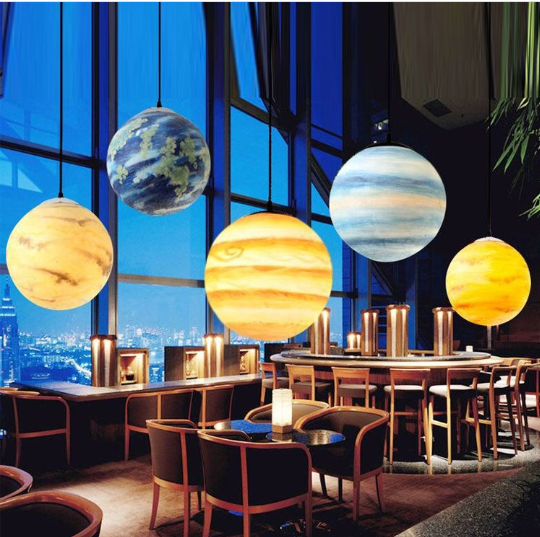
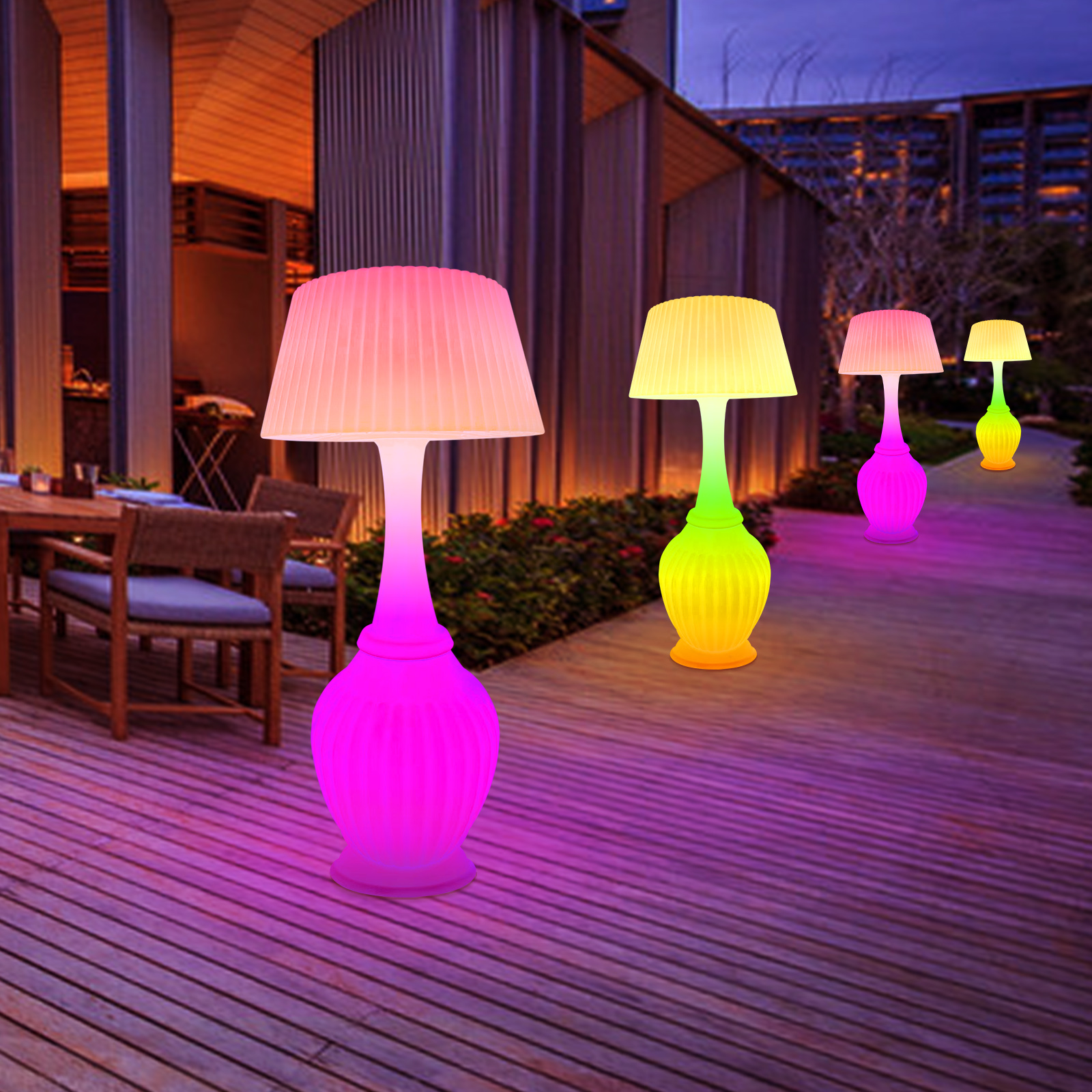
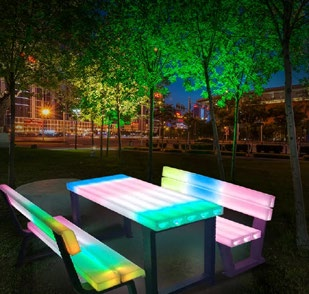
Advantages of PE
- Lightweight
- Good impact resistance
- Suitable for outdoor decorative applications
- Easy to create different shapes and sizes
- Easy to clean
- Suitable for large lighting products
- Can provide a soft and even glowing effect
For example, an illuminated PE garden ball can provide both ambient lighting and a decorative focal point.
For hotels, restaurants, cafés, gardens, parks, and event spaces, this combination can be very useful.
2. ABS: Strong and Practical
ABS (Acrylonitrile Butadiene Styrene) is another material commonly used in outdoor lighting.
It is relatively hard and rigid, with good impact resistance. ABS is often used for lamp housings, solar light components, and smaller outdoor lighting products.
Why Choose ABS?
ABS can be a good option when you need:
- A rigid housing
- Good impact resistance
- Lightweight construction
- A clean and modern appearance
- Cost-effective production
However, not all ABS products have the same outdoor performance.
UV resistance depends on the specific material formulation and manufacturing process. If the lights will be installed outdoors permanently, ask the supplier about UV protection and outdoor suitability.
3. PC: Strong and Good for Light Diffusion
PC (polycarbonate) is a popular choice when both durability and light transmission are important.
It has high impact resistance and can be used for lamp covers, diffusers, and protective components.
PC is especially useful when you want the LED light to spread evenly across the surface.
This can help reduce harsh bright spots and create a more comfortable lighting effect.
Advantages of PC
- High impact resistance
- Good light transmission
- Suitable for LED diffusers
- Lightweight compared with many metals
- Good dimensional stability
For commercial outdoor lighting, PC can be a practical choice when the lamp cover needs to provide both protection and good light diffusion.
4. Acrylic: Attractive and Clear
Acrylic, also known as PMMA, is often selected for its clear appearance and excellent light transmission.
It can create a bright, clean, and modern visual effect, which makes it popular for decorative lighting.
Acrylic can be used for:
- Decorative lamp covers
- Light diffusers
- Garden lighting
- Modern landscape lighting
- Outdoor decorative installations
However, acrylic is generally more vulnerable to strong impact than polycarbonate.
So, it can be a good choice when appearance and light clarity are more important, but the installation environment should be considered carefully.
For a busy public garden where the product may be hit or knocked over, another material may be more appropriate.
5. Stainless Steel: Strong and Modern
If you prefer a more traditional landscape-lighting appearance, stainless steel is another option.
It is commonly used for pathway lights, bollard lights, spotlights, and structural components.
Benefits of Stainless Steel
- Strong and rigid
- Modern appearance
- Good corrosion resistance when the appropriate grade is selected
- Suitable for structural applications
- Easy to combine with other materials
However, stainless steel quality matters.
For coastal locations or areas with high humidity, buyers should pay attention to the stainless-steel grade and surface treatment.
A material that works well in a dry garden may have different requirements in a seaside resort.
6. Aluminum: Lightweight and Good for Heat Management
Aluminum is widely used in outdoor LED lighting because it is lightweight and has good thermal conductivity.
LED components generate heat during operation. Good heat management can help support stable performance.
Aluminum is commonly used for:
- Garden spotlights
- Pathway lights
- Floodlights
- Landscape lighting fixtures
- Outdoor wall lights
It is a practical choice when you need a combination of low weight, durability, and heat management.
For technical landscape lights, aluminum can often be more suitable than decorative plastics.
Which Material Is Best for Outdoor LED Garden Lights?
There is no material that is perfect for every application.
For decorative garden lights, PE is often a practical choice because it offers design flexibility, impact resistance, and a soft glowing effect.
For technical landscape lighting, aluminum, stainless steel, ABS, or PC may be more suitable depending on the product structure.
How Should You Choose the Material?
Before placing an order, ask yourself a few simple questions.
Where Will the Lights Be Installed?
A sheltered hotel terrace has different requirements from an open garden or public park.
Will They Receive Direct Sunlight?
If yes, UV resistance should be an important consideration.
Is Impact Resistance Important?
For public spaces, restaurants, and commercial gardens, choose materials that can better handle accidental impacts.
Is Appearance a Priority?
For decorative projects, PE and acrylic can provide different visual effects.
Is the Product Large or Small?
Large decorative lights often benefit from lightweight materials, while smaller technical fixtures may require rigid metal housings.
What Is Your Budget?
Different materials have different production costs. The cheapest material is not necessarily the most cost-effective choice if the product needs frequent replacement.
Final Thoughts
So, what materials are best for outdoor LED garden lights?
For decorative lighting, PE is a strong all-around option when you need lightweight construction, flexible shapes, good impact resistance, and a soft glowing effect.
For technical landscape lighting, aluminum and stainless steel can provide strong structural support, while PC and acrylic are useful where light diffusion and appearance are important. ABS can also be a practical choice for certain housings and smaller outdoor lighting products.
The most important thing is to match the material with the application.
A garden light should not only look good when it is installed. It should also be able to handle the outdoor environment it will face every day.
FAQ
What is the best material for outdoor LED garden lights?
PE, PC, aluminum, stainless steel, ABS, and acrylic can all be suitable. The best choice depends on the product type, installation environment, durability requirements, design, and budget.
Is PE good for outdoor garden lights?
Yes. PE is lightweight, impact-resistant, and suitable for many decorative outdoor lighting applications. It is especially useful for glowing balls, planters, columns, and large decorative lights.
Is aluminum good for outdoor LED lights?
Yes. Aluminum is lightweight and has good thermal conductivity, making it widely used for outdoor LED fixtures such as spotlights, pathway lights, and landscape lighting.
Is acrylic suitable for outdoor lighting?
Acrylic can be suitable for outdoor decorative lighting, especially when clear light transmission and appearance are important. However, areas with a high risk of physical impact may require a more impact-resistant material.
Does material affect the lifespan of an outdoor LED garden light?
Yes, but material is only one factor. Waterproofing, UV resistance, LED components, electrical parts, manufacturing quality, and installation conditions can also affect product lifespan.
Looking for durable outdoor LED garden lights for a garden, hotel, restaurant, café, park, or landscaping project?
Contact us to discuss the right material, size, lighting effect, and specifications for your project.
Related Reading:
How Long Do Outdoor LED Garden Lights Usually Last?
What IP Rating Should Outdoor LED Garden Lights Have?
How to Choose the Right Heater Lamp for an Outdoor Dining Area
What Specifications Should You Check Before Buying LED Garden Lights?
LED Garden Lights vs Traditional Garden Lighting: What Is the Difference?
Post time: Sep-09-2026