
When choosing LED outdoor garden lights, should you choose solar garden lights with no fixed power connection? Or should you choose plug-in LED garden lights for more stable lighting?
Both options have their advantages.
The better choice depends on your project, installation location, expected lighting time, and how important consistent brightness is.
Let’s compare them.
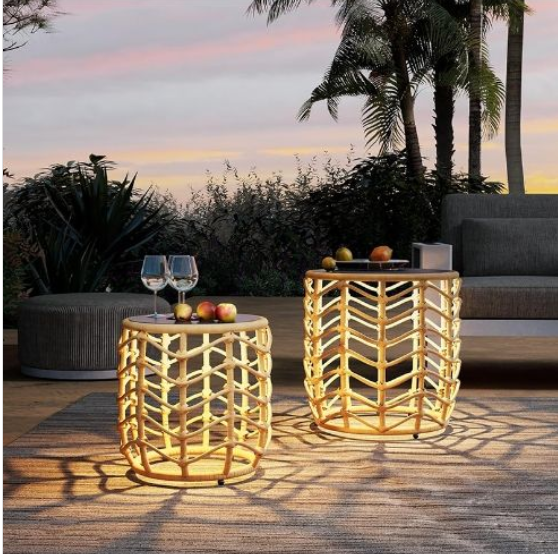
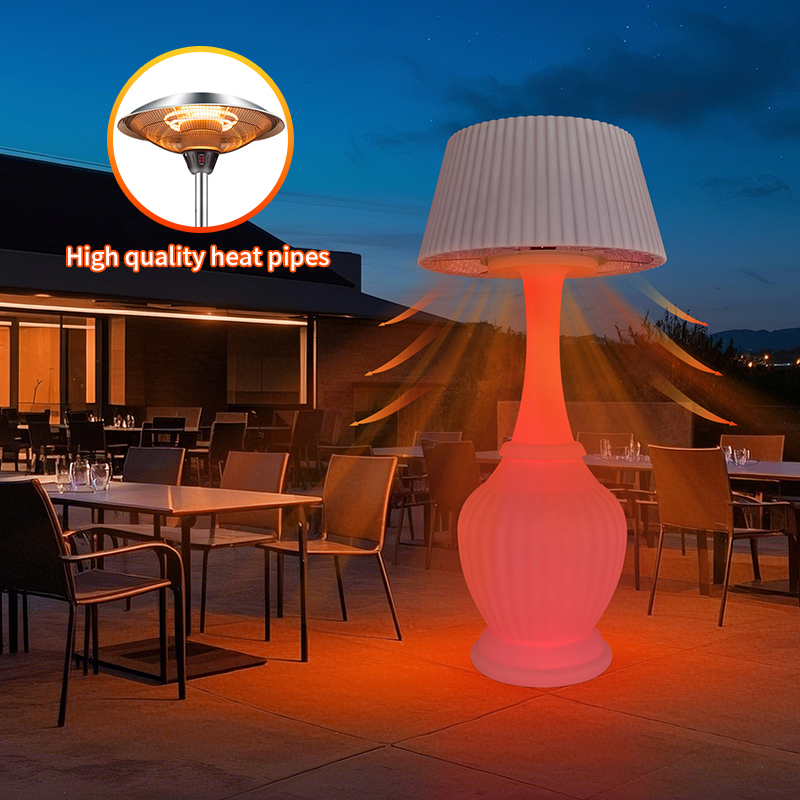
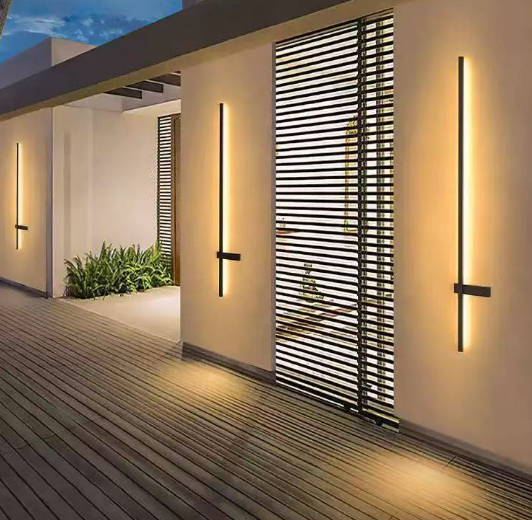
LED solar garden lights Winter Smart Outdoor Heater Lamp Modern popular LED wall lights
What Are Solar LED Garden Lights?
Solar LED garden lights use a solar panel to collect energy from sunlight during the day.
The stored energy is then used to power the light after dark.
A typical solar garden light may include:
- Solar panel
- Rechargeable battery
- LED light source
- Controller
- Housing
- Light sensor or automatic control system
When the surrounding light becomes low, the lamp can automatically turn on.
This makes solar lighting attractive for outdoor areas where running power cables would be difficult or expensive.
What Are Plug-In LED Garden Lights?
Plug-in LED garden lights receive power from an electrical connection.
Unlike solar lights, they don’t depend on sunlight to charge a battery before they can work.
This can provide more consistent lighting, especially when the lights need to operate for long periods or at a stable brightness.
Plug-in garden lights can be a practical choice for:
- Restaurant terraces
- Hotel gardens
- Outdoor bars
- Commercial landscapes
- Resorts
- Courtyards
- Event spaces
- Permanent landscape installations
For projects that already have a suitable power supply nearby, plug-in lighting can also simplify the decision.
Solar vs Plug-In LED Garden Lights: What’s the Difference?
Here’s a quick comparison:
| Feature | Solar LED Garden Lights | Plug-In LED Garden Lights |
| Power source | Sunlight | Electrical connection |
| Power cables | Usually not required for the light | Required |
| Installation | Flexible | Requires power connection |
| Dependence on sunlight | Yes | No |
| Lighting consistency | Can vary | Generally more consistent |
| Long operating periods | Depends on battery capacity and charging | More suitable |
| Maintenance | Battery may need replacement | Electrical components may need maintenance |
| Initial installation | Often easier | May require wiring |
| Suitable for remote areas | Excellent | More difficult |
| Commercial projects | Depends on application | Often suitable |
| Decorative lighting | Excellent | Excellent |
The biggest difference is simple:
Solar lighting depends on available sunlight and stored energy. Plug-in lighting depends on a stable electrical supply.
When Should You Choose Solar Garden Lights?
Solar garden lights are especially useful when easy installation and flexible placement are important.
Imagine a large garden where there is no convenient electrical connection.
Running cables across the entire area could increase installation work and cost.
Solar lights can avoid much of that work.
They can be useful for:
Gardens and Lawns
Solar lights can be placed in different areas without needing a nearby electrical outlet for every fixture.
Pathways
They can provide decorative lighting along garden paths and walkways.
Parks and Landscape Projects
For some outdoor areas, avoiding extensive cable installation can make the project easier.
Remote Outdoor Areas
If bringing electrical power to the location is difficult, solar can be a practical solution.
Temporary or Flexible Installations
Solar lights can also be useful when the lighting location may change in the future.
When Should You Choose Plug-In LED Garden Lights?
Plug-in garden lights can be a better fit when stable and predictable lighting is the priority.
For example, a restaurant may want its outdoor decorative lights to stay on throughout the evening.
A hotel may need consistent lighting for an outdoor lounge or entrance area.
A commercial landscape project may also require the same lighting performance every night, regardless of the weather conditions during the day.
In these situations, plug-in lighting can provide an important advantage.
Plug-In Lights Are Worth Considering If You Need:
- Stable power
- Consistent brightness
- Longer operating periods
- Reliable daily operation
- Stronger control over lighting schedules
- Color-changing effects for commercial spaces
For larger projects with an existing electrical system, plug-in garden lights can also be easier to integrate into the overall lighting plan.
What About Cloudy or Rainy Weather?
This is one of the most important questions when comparing solar and plug-in garden lights.
Solar lights need sunlight to recharge their batteries.
That doesn’t mean they stop working whenever the sky is cloudy.
However, the amount of available solar energy can affect how much energy is stored during the day.
Several consecutive days with limited sunlight may reduce the available battery power.
Plug-in lights don’t have this same charging issue.
As long as the electrical supply is available, the lights can continue operating without waiting for sunlight.
So, if your project is located in an area with frequent cloudy weather, this is something worth considering when choosing between the two.
Which One Has Lower Installation Costs?
Solar lights can reduce wiring work because each light can operate independently.
This can be particularly useful for large gardens, lawns, parks, or other spaces where installing underground cables would be complicated.
However, the total cost isn’t determined by wiring alone.
You should also consider:
- Solar panel
- Battery
- Controller
- Product price
- Installation labor
- Future battery replacement
- Maintenance
- Expected operating time
Plug-in lights may require more installation work at the beginning, especially if new wiring is needed.
But if a suitable electrical system already exists, the additional installation work may be relatively simple.
Which One Is Easier to Maintain?
Both systems need some maintenance.
For solar lights, the solar panel should be kept reasonably clean so it can receive sunlight.
The rechargeable battery is another important component.
Over time, batteries can lose their ability to hold a charge and may eventually need replacement.
Plug-in lights don’t rely on rechargeable batteries, but the electrical connections, cables, switches, and other components still need to be checked when necessary.
So the maintenance question isn’t simply “Which one needs less maintenance?”
A better question is:
Which system is easier to maintain in your specific installation environment?
What About Lighting Time?
Lighting time is another key consideration.
With solar garden lights, nighttime operation depends on factors such as:
- Solar panel size
- Battery capacity
- Charging time
- Amount of sunlight
- LED power
- Weather conditions
- Lighting mode
For example, a decorative light using a low-power LED may operate for a long period with a relatively small battery.
A brighter RGB or RGBW light with changing colors may require more energy.
Plug-in lights don’t have the same battery limitation.
If the electrical supply is stable, they can continue operating according to the control schedule.
This makes them attractive for commercial spaces where lighting time is an important part of the customer experience.
Solar or Plug-In for RGB and RGBW Garden Lights?
The power source can also affect your choice of lighting effect.
RGB and RGBW garden lights can require more energy than a simple single-color decorative light, especially when used at higher brightness.
For solar products, the battery and solar panel therefore need to be matched to the actual lighting requirements.
If you want colorful lighting to operate for several hours every evening, check the complete system rather than looking only at the solar panel.
For plug-in RGB or RGBW garden lights, power availability is less of a concern.
This can make them more suitable for restaurants, hotels, resorts, outdoor bars, and event spaces where colorful lighting needs to operate reliably.
What About Dazzling Lighting Effects?
Dynamic lighting effects can also affect power requirements.
A Dazzling lighting effect may involve changing colors, flashing patterns, or other dynamic programs.
If the lighting effect is more active, energy consumption may be different from a simple static color.
For solar products, this makes it especially important to ask about the actual battery capacity and expected operating time under the selected lighting mode.
For plug-in products, the electrical supply can support the lighting system without relying on stored solar energy.
So if your project is centered around strong dynamic lighting effects, plug-in lighting may offer more flexibility.
Which Is Better for Restaurants and Hotels?
For commercial spaces, the answer often depends on how the lighting will be used.
Restaurant Outdoor Dining
If the lights need to operate every evening for a predictable period, plug-in LED garden lights can provide consistent power.
Solar can also work well when installation flexibility is more important.
Hotel Gardens
Solar lights can be useful for decorative landscape areas where running cables is difficult.
Plug-in lights can be useful for entrances, terraces, outdoor lounges, and areas where reliable lighting is more important.
Resorts
A resort may use both.
Solar lighting can work well in large landscape areas, while plug-in lighting can support restaurants, event spaces, poolside areas, and other high-use locations.
Outdoor Events
For temporary or flexible areas, solar can reduce wiring requirements.
However, if the event requires strong, bright, or dynamic lighting for several hours, a stable electrical supply may be more practical.
Can You Use Both Solar and Plug-In Garden Lights?
Absolutely.
You don’t have to use only one type throughout an entire project.
A mixed lighting plan can sometimes make more sense.
For example:
- Solar garden lights for remote landscape areas
- Plug-in lights for restaurant terraces
- Solar lights along garden paths
- Plug-in RGBW lights around outdoor dining areas
- Plug-in Dazzling lights for event spaces
This approach lets you match the power source to the actual needs of each area.
What Should You Ask Your Supplier Before Buying?
Before choosing solar or plug-in LED garden lights, ask a few practical questions.
For Solar Garden Lights
Ask about:
- Solar panel type and size
- Battery capacity
- Expected charging time
- Expected operating time
- Performance under cloudy conditions
- Battery replacement
- Lighting modes
- IP rating
- LED power
For Plug-In Garden Lights
Ask about:
- Input voltage
- Power consumption
- Cable length
- Plug type
- Waterproof protection
- Installation method
- Lighting control
- Available RGB/RGBW effects
- Dazzling lighting modes
Don’t compare only the unit price.
Compare the complete system and the way you plan to use it.
Solar vs Plug-In: Which One Is Right for Your Project?
There is no single answer for every outdoor lighting project.
Choose solar LED garden lights when you value flexible installation, minimal wiring, and independent operation.
Choose plug-in LED garden lights when stable power, predictable lighting, longer operating periods, or advanced lighting effects are more important.
And for larger commercial projects, consider using both.
The best lighting plan is often the one that matches the power source to the location and purpose of each light.
FAQ
Are solar garden lights better than plug-in garden lights?
Neither is universally better. Solar lights are useful when flexible installation and minimal wiring are important, while plug-in lights are useful when stable power and predictable operating time are priorities.
Do solar garden lights work on cloudy days?
They can still operate, but limited sunlight can reduce the amount of energy stored in the battery. Actual performance depends on the solar panel, battery, weather, and lighting system.
Do plug-in garden lights use more electricity?
Plug-in lights consume electricity while operating, but actual consumption depends on LED power, operating time, and lighting mode.
Which is better for commercial outdoor lighting?
It depends on the project. Solar can be useful for large or remote landscape areas, while plug-in lights can be suitable for restaurants, hotels, resorts, and other commercial spaces that need consistent lighting.
Can RGB or RGBW garden lights be solar powered?
Yes, RGB and RGBW lighting can be combined with solar power, but the solar panel and battery need to be properly matched to the lighting power and expected operating time.
Can solar and plug-in garden lights be used in the same project?
Yes. Using both can be a practical way to match different lighting areas with different power requirements.
Related Reading:
How Bright Should Outdoor Decorative Garden Lights Be?
What IP Rating Should Outdoor LED Garden Lights Have?
What Materials Are Best for Outdoor LED Garden Lights?
RGB vs RGBW vs Dazzling Garden Lights: Which Is Better?
What Specifications Should You Check Before Buying LED Garden Lights?
Post time: Sep-22-2026