
Have you ever seen an outdoor garden light that looked great when it was new, but a few years later started to look faded, yellow, or cracked?It’s a common problem.
Outdoor decorative lights have to deal with much more than rain. Day after day, they may sit under strong sunlight, face UV radiation, moisture, temperature changes, dust, and occasional impact. Over time, these conditions can affect the material and the appearance of the light.
But why does it happen?
And more importantly, how can you choose outdoor garden lights that are better suited to long-term outdoor use?
Let’s take a closer look.
Why Do Outdoor Garden Lights Fade?
One of the main reasons is UV exposure.
Ultraviolet radiation from sunlight can gradually affect certain plastics and surface materials. With long-term exposure, the material may lose its original color or become less attractive.
This is especially noticeable with decorative garden lights because they are often installed in open areas where there is little protection from direct sunlight.
A light that receives several hours of strong sunlight every day may age much faster than one installed under a covered terrace.
That doesn’t mean every plastic garden light will fade.
The material quality and its resistance to UV exposure make a big difference.
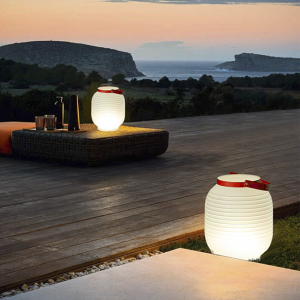
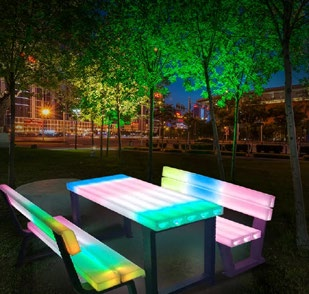
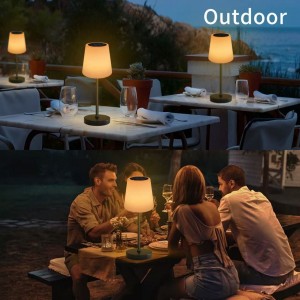
Why Do Some Garden Lights Turn Yellow?
Yellowing can also be related to long-term exposure to sunlight and environmental conditions.
Some materials may gradually change color when exposed to UV radiation, heat, moisture, or other outdoor factors.
This can be particularly noticeable on white or translucent decorative lights.
And there’s a visual problem here: when a diffuser turns yellow, the light may no longer look as clean and bright as it did when new.
For decorative garden lighting, appearance matters.
After all, the light is often part of the landscape design.
Why Do Outdoor Garden Lights Crack?
Cracking can have several causes.
Long-term UV exposure may make some materials more brittle. Repeated temperature changes can also place stress on the material, especially when the product is exposed to strong sunlight during the day and much cooler temperatures at night.
Physical impact is another factor.
A garden light installed beside a walkway, restaurant terrace, public garden, or event area may occasionally be bumped or knocked over.
This is why impact resistance is worth considering when choosing outdoor decorative lighting.
Does Waterproofing Affect the Lifespan of Garden Lights?
Yes, but waterproofing and material durability are two different things.
A strong housing material does not automatically make a complete lamp waterproof.
Water can enter through poorly sealed joints, cables, switches, battery compartments, or other openings.
Once moisture reaches sensitive electrical components, problems may occur.
That’s why buyers should consider both material quality and IP rating.
For outdoor garden lights, the complete product structure matters—not just the material name printed on a specification sheet.
Why Is PE Used for Outdoor Decorative Garden Lights?
PE (polyethylene) is widely used for decorative outdoor lighting because it offers a useful combination of lightweight construction, impact resistance, and design flexibility.
It can be molded into many shapes and sizes, including:
- Glowing garden balls
- Illuminated planters
- Light columns
- Decorative figures
- Cubes
- Custom-shaped garden lights
For large decorative products, PE also has a practical advantage: it can create a substantial visual presence without the weight of a comparable metal structure.
But not all PE materials are the same.
The quality of the raw material and its outdoor resistance are important.
How Does Huajun Approach Outdoor Garden Light Materials?
For outdoor decorative garden lights, Huajun uses high-quality PE imported from Thailand.
The material is selected for outdoor applications where resistance to sunlight, rain, and everyday impact matters.
According to the product specifications, these garden decorative lights have an IP65 protection rating and UV resistance level 8.
That combination is important.
The IP65 rating provides protection against dust and water jets, while strong UV resistance helps the material better handle long-term exposure to sunlight.
In other words, the goal isn’t simply to make a garden light look attractive when it leaves the factory.
The material needs to be suitable for the environment where the light will actually be used.
What Makes UV Resistance Important?
Think about a white plastic chair left outside in the sun for years.
At first, it looks clean and bright.
Then, little by little, the surface may change.
Outdoor decorative lights face a similar challenge.
That is why UV resistance is an important specification for garden lights installed in:
- Open gardens
- Parks
- Hotel landscapes
- Restaurant terraces
- Café outdoor areas
- Resorts
- Lawns
- Poolside spaces
Huajun’s PE garden decorative lights are designed with a UV resistance level of 8, helping them maintain their outdoor appearance under prolonged sunlight exposure.
For projects in sunny climates, this can be an especially important consideration.
What About Rain, Dust and Everyday Outdoor Use?
Sunlight isn’t the only challenge.
Outdoor garden lights may also face rain, humidity, dust, and accidental impact.
Huajun’s garden decorative lights use PE housing and have an IP65 rating, making them suitable for many outdoor applications where protection against dust and water exposure is required.
The products are also designed to be waterproof, sun-resistant, and impact-resistant.
Of course, installation still matters. Even a well-protected outdoor light should be installed according to its product specifications and intended environment.
Can Material Affect the Service Life of Garden Lights?
Definitely—but it is not the only factor.
The service life of an outdoor decorative light can also depend on:
- LED components
- Electrical components
- Waterproof structure
- UV resistance
- Material quality
- Manufacturing quality
- Operating conditions
- Installation environment
For Huajun’s outdoor garden decorative lights, the stated service life can reach 15–20 years under suitable conditions.
That doesn’t mean every product will automatically last exactly 20 years in every climate.
Outdoor conditions vary.
A coastal environment, extremely hot climate, strong sunlight, and frequent physical contact can create different demands from a sheltered garden.
Still, choosing durable materials and suitable protection from the beginning can help reduce premature replacement.
What Should Buyers Ask Before Purchasing?
If you’re buying outdoor LED garden lights for a commercial project, don’t stop at the price.
Ask the supplier:
What Material Is Used?
Is it PE, ABS, PC, acrylic, aluminum, stainless steel, or another material?
Is It UV Resistant?
If the light will receive direct sunlight, ask for specific UV-resistance information.
What Is the IP Rating?
Check whether the protection level matches the actual outdoor environment.
Is the Housing Impact Resistant?
This matters for public gardens, restaurants, hotels, and busy outdoor areas.
How Long Is the Expected Service Life?
Ask whether the stated lifespan refers to the LED, the complete product, or a specific component.
Can You Provide Samples or Product Details?
A sample can tell you a lot about the material, surface finish, light diffusion, and overall construction.
Don’t Choose Outdoor Garden Lights by Appearance Alone
A beautiful garden light can catch your eye immediately.
But outdoor lighting is a long-term investment.
If the housing fades, cracks, or turns yellow after a few years, the product may no longer create the visual effect you originally wanted.
That’s why material quality, UV resistance, waterproof protection, and impact resistance deserve attention before you place an order.
For decorative outdoor projects, the light needs to look good—but it also needs to keep looking good.
Final Thoughts
So, why do outdoor garden lights fade, crack, or turn yellow after a few years?
Long-term UV exposure, heat, moisture, temperature changes, poor material quality, and physical impact can all contribute to premature aging.
The good news is that these problems can often be reduced by choosing products designed specifically for outdoor conditions.
Huajun’s outdoor garden decorative lights use high-quality PE imported from Thailand, with IP65 protection and UV resistance level 8. The material is designed to be waterproof, sun-resistant, and impact-resistant, with a stated service life of 15–20 years under suitable conditions.
For a garden, hotel, restaurant, park, café, or resort, that’s an important difference.
Because outdoor decorative lighting shouldn’t just look good on the day you install it.
It should still look good years later.
FAQ
Why do outdoor garden lights turn yellow?
Outdoor garden lights may turn yellow because of long-term UV exposure, heat, material aging, and environmental conditions. The type and quality of the material can affect how quickly yellowing occurs.
How can I prevent outdoor garden lights from fading?
Choose garden lights made with outdoor-suitable materials and good UV resistance. Installation location also matters, especially in areas exposed to strong direct sunlight.
Is PE a good material for outdoor decorative garden lights?
Yes. PE is lightweight, impact-resistant, and flexible for decorative designs. It is commonly used for illuminated garden balls, planters, columns, and other large outdoor decorative lights.
Are Huajun outdoor garden lights UV resistant?
Yes. Huajun’s outdoor garden decorative lights use high-quality PE imported from Thailand and have a stated UV resistance level of 8, along with IP65 protection.
How long can outdoor LED garden lights last?
Service life varies depending on the material, LED components, electrical parts, environment, and usage. Huajun states a service life of 15–20 years for its outdoor garden decorative lights under suitable conditions.
Looking for durable outdoor LED garden lights for long-term outdoor use?
Contact us to learn more about our PE outdoor decorative garden lights, including material, IP rating, UV resistance, sizes, lighting effects, and customization options for gardens, hotels, restaurants, parks, and landscaping projects.
Related Reading:
How Long Do Outdoor LED Garden Lights Usually Last?
What IP Rating Should Outdoor LED Garden Lights Have?
How Bright Should Outdoor Decorative Garden Lights Be?
What Specifications Should You Check Before Buying LED Garden Lights?
What Materials Are Best for Outdoor LED Garden Lights?
Post time: Sep-15-2026